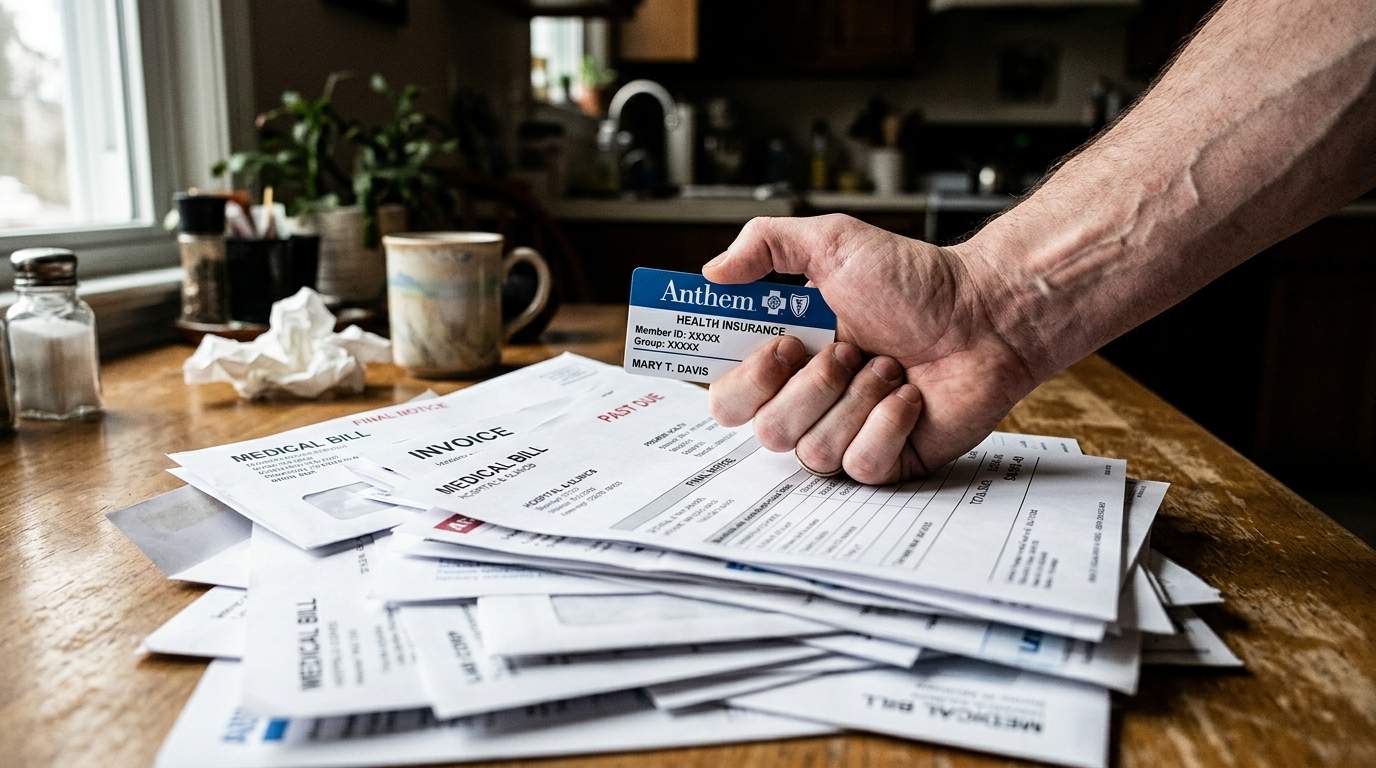
I made the minimum payment for four years. $312 a month, autopay, never missed. Felt responsible. Then I requested a payoff statement. My original $42,000 balance was still $41,200. I had paid nearly $15,000. Four years of my life. $15,000 gone. And I had killed only $800 of principal. The rest was interest. The bank didn't throw me a party. They just sent another bill.
That's when I learned the ugly truth: student loan minimum payments are designed to keep you renting your own debt forever. The lender isn't your partner. They're a landlord collecting rent on money you already borrowed.
Here's what no exit counselor told me: on a standard 10-year plan, your first payment is almost all interest. But on an income-driven plan? You can pay for 20 years and owe more than you started.
The Interest Accrual Monster: How $50,000 Becomes $90,000
Federal student loans accrue interest daily. At 6% on a $50,000 balance, that's about $8.22 per day. $246 per month. $2,960 per year. If your income-driven payment is $200 a month, you never touch principal. The loan grows while you pay.
Real example from a client: A social worker in Oregon owed $58,000 at 5.8%. Her income-driven payment was $180. After three years, she'd paid $6,480. Her balance? $61,200. She owed $3,200 more than when she started. She cried on the phone. The Department of Education calls that "negative amortization." I call it legalized drowning.

The Statement They Don't Highlight
Look at your monthly statement. Find the "interest accrued since last payment" line. Compare it to your payment amount. If interest is more than half your payment, you are running in place. If interest is more than your entire payment, you are moving backward. Most income-driven borrowers are in this second group.
The Repayment Plan Trap: Which One Actually Saves You
Four plans exist. Three of them are traps for anyone who isn't permanently poor.
Standard 10-year plan: Highest payment. Lowest total interest. You'll pay roughly $550 monthly on $50,000 at 6%. Total interest: about $16,000. This is the winner if you can afford it.
Extended 25-year plan: Lower payment ($320), but total interest jumps to $46,000. You pay triple.
Income-driven (IBR/PAYE): Payment as low as $150. Total interest if you pay off? Over $60,000. Most never pay it off. They wait 20-25 years for forgiveness, then get taxed on the forgiven amount as if it were income.
The Forgiveness Fantasy
The government forgives your balance after 20-25 years of income-driven payments. Sounds great. But the forgiven amount is taxable. On a $70,000 forgiveness, you owe the IRS roughly $15,000 to $20,000 in that year. Most borrowers don't save for that. They get a tax bill they can't pay. Then the IRS puts a lien on everything you own.
I learned this from a nurse who had $45,000 forgiven. She owed $12,000 in taxes. She didn't have it. She put it on a credit card at 22%. That's not freedom. That's a trade.
The Debt Avalanche Method for Student Loans (Works Faster Than You Think)
Ignore the "snowball" advice for student loans. Attack the highest interest rate loan first, even if it's your smallest balance.
Actionable step: List every student loan with its balance, interest rate, and servicer. Sort by interest rate descending. Pay minimums on everything except the top one. Throw every extra dollar at that top loan. When it's gone, move down.
I did this with $62,000 across eight loans. Rented a cheaper apartment. Sold my car, bought a $3,000 Honda. Delivered groceries on weekends. Eighteen months later, I was done. The interest I avoided? Over $11,000. That's not a number. That's a year of rent.
The Biweekly Payment Hack
Instead of one monthly payment, split it in half and pay every two weeks. On a 10-year loan, this shaves off about 8-12 months of payments and saves hundreds in interest. Why? Because you make 26 half-payments a year (13 full payments), not 12. The extra payment goes entirely to principal. Most servicers allow this for free.
The Refinancing Escape Hatch (Use Carefully)
Private refinancing can drop your rate from 6-8% down to 3-5% if you have good credit and stable income. The trade-off: you lose federal protections like income-driven plans, deferment, and forgiveness options.
When to refinance: You have a stable job. You have an emergency fund. You are not pursuing Public Service Loan Forgiveness (PSLF). Your rates are above 6%. You plan to aggressively pay off the loan in under five years.
When not to refinance: You work in a low-paying public service job. You might need income-driven payments. You have any chance of disability or job loss. I learned this after a friend refinanced $80,000, then got sick, lost his job, and had no federal options. Private lenders don't care about your sob story.
The One-Week Challenge
Call your loan servicer today. Ask for a "payoff statement as of today." Then run an amortization calculator online. See what your total cost will be if you keep paying the minimum. Then calculate what happens if you add $100 extra per month. For most borrowers, that extra $100 cuts 3-5 years off the loan and saves $4,000-$8,000. That's the highest guaranteed return you will ever find.
The Behavioral Shift: Stop Treating Student Loans as "Good Debt"
Someone told you student loans are "good debt" because they build your future. That's marketing from the student loan industry. Good debt is debt that buys an asset that produces income. A degree that didn't lead to a high salary? That's not an asset. It's an expensive memory.
I kept my student loans for six years because "everyone has them." That cost me a down payment on a house. I finally paid them off at 32. The relief was immediate. My heart rate dropped. I stopped checking my bank account with dread.
Here's my question for you: if you met your 50-year-old self today, what would they say about the monthly payment you're treating as "just part of life"? Would they thank you for keeping it? Or would they ask why you didn't kill it faster when you had the energy, the side hustle, and the time?