We speak often of weight. The weight of responsibility, of history, of a glance held too long. We seek objects of substance to anchor our days, to testify to a life lived in full measure. Yet, what of the profound substance of lightness? What of the moment a breath catches, not from burden, but from a grace so absolute it defies the very pull of the earth? It is in this delicate paradox—the weight of light, the gravity of grace—that true artistry resides, transforming precious matter into a testament against gravity itself.
Consider the ballerina, en pointe. A sublime deception of physics. Every muscle is taut with controlled power, every tendon a cable of will, yet the impression is one of ethereal suspension, a body becoming breath. This is not absence of strength, but its ultimate refinement. To witness this is to understand a fundamental truth: the most powerful statements are often whispered, the most precious burdens are those we choose for the sheer joy of their carrying.
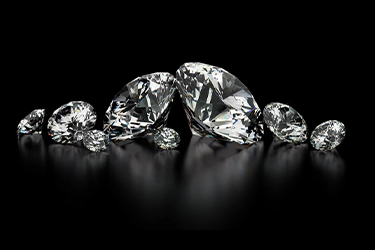
It is this philosophy, this dance at the event horizon of weight and wonder, that Cartier masters with the Ballerine earrings. To call them merely diamond floral clusters is to call a sonnet an arrangement of syllables. Look closer. Here, the diamond is not just a stone, but a syllable in a visual haiku of light. Each brilliant-cut and marquise diamond is set with a jeweler’s version of épaulement—the subtle turn of a dancer’s shoulders. They are angled, not merely placed, to catch the light from a thousand reluctant surrenders, creating a cascade of fire that seems generated from within the wearer’s own movement.
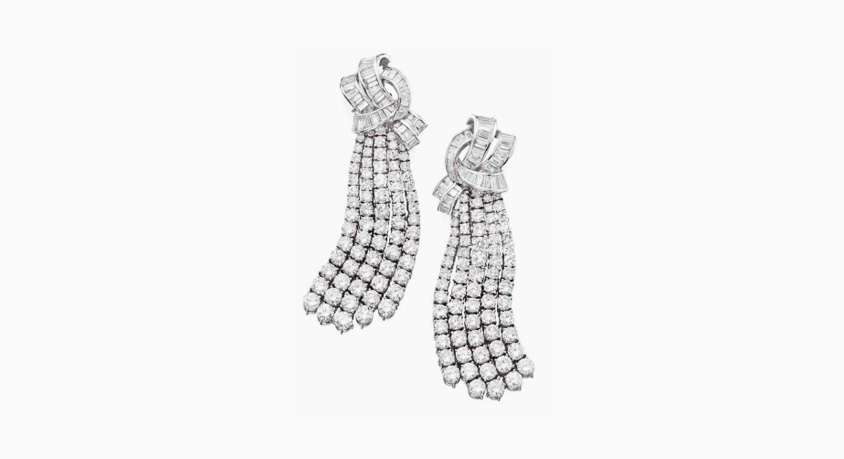
The cluster itself is a study in controlled chaos, a frozen explosion of petals at the very apex of their bloom. This is where Cartier’s legacy as the jeweler of kings translates into the language of nature. The platinum setting, that cool, moon-metal framework, disappears into a tracery of stems so fine they seem drawn by a breath on glass. It performs the ultimate magic trick: making the immense structural engineering required to secure such a wealth of diamonds utterly vanish, leaving only the impression of organic growth. The diamonds do not sit upon the setting; they bloom from it, as if the metal itself crystallized into morning dew.
To wear the Ballerine is to engage in a silent, continuous narrative. It is for the moment you turn your head to listen, and a constellation detaches itself from your silhouette to punctuate your attention. It is for the soft illumination it casts upon the neck, a private spotlight for a collarbone, a jawline—a celebration of the architecture of the human form. This is jewelry not as a proclamation, but as intimate revelation. It speaks in the lexicon of turned pages, of leaned-in conversations, of a thoughtful glance out a rain-streaked window. It understands that luxury, at its pinnacle, becomes personal poetry.
In a world that often shouts, the Ballerine offers the devastating power of a whisper. It carries the weight of Cartier’s century-and-a-half of iconoclasm—the bold panthers, the geometric mysteries of the Tutti Frutti, the savage elegance of Crash watches—and distills it into an essence of pure, airborne femininity. It does not mimic the dancer; it embodies her principle. For what is a diamond but carbon subjected to unimaginable pressure and time, emerging not as a lump of darkness, but as a prism for all light? The Ballerine earrings are that final, triumphant pirouette: the transformation of weight into weightlessness, of stone into scintillation, of mineral into a captured breath of stars. They are not worn on the ear, but from it, a suspended ode to the graceful, gravity-defying act of being alive.