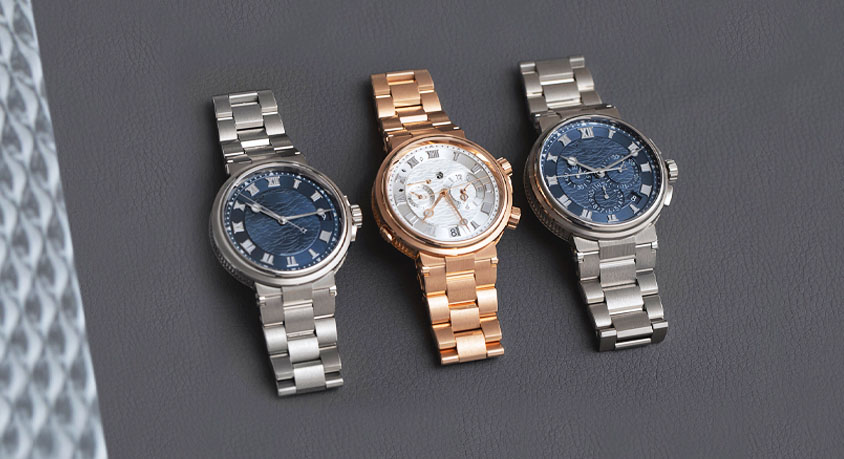
Spending a quiet afternoon in a café in Monaco, I found myself staring at the wrist of the person across from me. There was a subtle shimmer, a tiny whirlwind spinning in perfect rhythm—a Breguet Classique Tourbillon Extra-Plat, if I wasn’t mistaken. It felt like watching a miniature hurricane contained within a case of sapphire crystal. You don’t just glance at a tourbillon; you watch it, almost mesmerized, as if it’s performing a private ballet just for you.
Some friends joke that tourbillons are “watchmaking flexes,” and I can’t entirely disagree. Holding an Audemars Piguet Royal Oak Concept Tourbillon in your hand is like cradling a piece of engineering poetry. There’s a bridge here, a cage there, and suddenly your mind is doing mental gymnastics trying to understand how hundreds of tiny components interact perfectly to counter gravity’s effects on the escapement. It’s funny, because to the untrained eye, it might just look like a fancy spinning wheel, but to a watch nerd—or anyone who’s ever spent time staring through a loupe—it’s a miniature miracle.
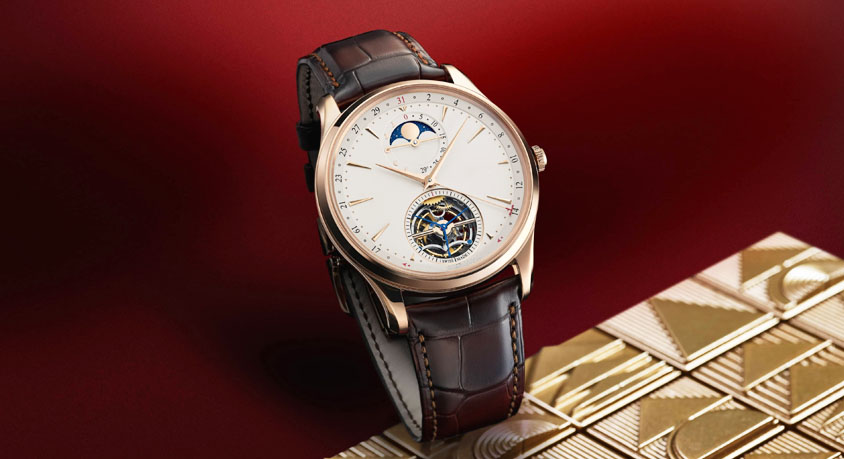
Walking through a boutique in Geneva, I noticed how a Jaeger-LeCoultre Master Ultra Thin Tourbillon can almost disappear into a wrist, yet still demand attention. The paradox is delightful: delicate yet commanding, understated but undeniably complex. That micro-engineering precision is part of the thrill. Even when a watch tells the time the same way a regular mechanical watch does, the tourbillon adds a layer of sophistication that’s part science, part artistry.
Tourbillons come in all shapes and forms. Some rotate once per minute, like the classic Breguet designs, while others, like the more modern multi-axis versions in the Greubel Forsey collection, seem to defy gravity in three dimensions. Seeing a double or triple-axis tourbillon is almost like watching physics bend in real time—planes of rotation stacking and twisting, a tiny sculpture in motion. I once tried explaining this to a friend over brunch in London, and they just stared, probably wondering why I was so obsessed with a spinning cage inside a watch.
It’s not just about showmanship. The tourbillon’s original purpose, crafted by Abraham-Louis Breguet in 1795, was to improve accuracy by compensating for positional errors caused by gravity. In today’s world of quartz precision, this purpose is more symbolic than necessary, but that historical weight gives every tourbillon a story. Wearing one feels like holding a piece of horological history on your wrist—an invisible bridge connecting centuries of craftsmanship.
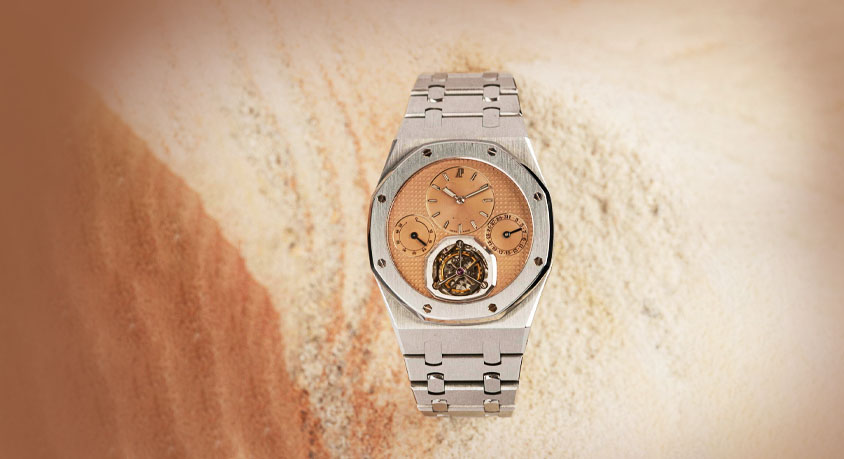
Even casual conversations can turn into mini masterclasses. Sitting in a café in Hong Kong, a passerby noticed my Audemars Piguet Royal Oak Concept Tourbillon and asked, “Why does it spin like that?” A few minutes later, we were talking about escapements, balance wheels, and why the tourbillon is considered one of the pinnacles of watchmaking. It’s remarkable how a tiny mechanism, often just a few millimeters across, can spark curiosity, conversation, even admiration from strangers.
Then there’s the aesthetics. The spinning cage is hypnotic, but watchmakers often use it as a canvas. Bridges are hand-polished, cages beveled, screws blued. You’re not just looking at a functional piece; you’re admiring miniature sculpture. The finishing can take hundreds of hours, and each component must be perfect. It’s not just engineering; it’s a form of storytelling. Some watches even expose multiple tourbillons, like the Jaeger-LeCoultre Duomètre Sphérotourbillon, turning the dial into a kinetic masterpiece.
Carrying this level of craftsmanship into daily life is a little surreal. Checking the time while commuting in New York, I can’t help but watch the tiny wheel spin, momentarily forgetting the rush of emails and meetings. Tourbillons remind you that time is not just a number—it’s motion, physics, and human ingenuity combined. Even the act of winding a hand-wound tourbillon feels ceremonial, almost meditative.
Collecting tourbillons is a subtle kind of obsession. Some people chase technical feats—multi-axis, constant force, or flying designs—while others are drawn to the story, the aesthetics, or the brand’s heritage. What unites them is a fascination with a microcosm of mechanical perfection that lives on your wrist. The phenomenon seems a bit ironic: a watch designed to counter gravity is itself a luxury, far removed from practical necessity, yet somehow, it feels essential to those who appreciate horology.
Sitting in a quiet spot in Singapore, sipping coffee and glancing at a Breguet or Jaeger-LeCoultre, it’s easy to see why tourbillons are revered. They’re tiny tornadoes of craftsmanship, precision, and history—complex, mesmerizing, and utterly human. A tourbillon isn’t just a complication; it’s a celebration of what can be achieved when patience, skill, and artistry converge in a few millimeters of metal, springs, and jewels.
Time passes differently when you watch a tourbillon spin. Ordinary minutes gain texture, every glance at the wrist becomes a reminder of human ingenuity. And for anyone who’s ever stared at one long enough, it’s hard not to feel a little enchanted, a little humbled, and a lot inspired.