
Summary: The latest data show that Germany's seasonally adjusted GDP fell by 0.3% year-on-year at the end of 2023, in line with expectations. Although the short-term fluctuations of the euro against the US dollar are not significant, the weakness of German economic growth is still attracting attention. This article examines the significance of these data and the potential impact on the Fund's adjustment in 2024.
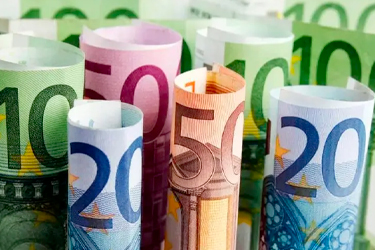
The EUR/USD exchange rate fluctuated slightly around the 1.0957 level. However, the data showed that Germany's seasonally adjusted GDP fell by 0.3% year-on-year at the end of 2023, in line with expectations, indicating that Germany's economic growth is weak. There is some important information hidden behind this data, which could have an impact on the Fund's adjustment in 2024.
As one of the largest economies in the Eurozone, Germany's weak economic growth has attracted widespread attention. Seasonally adjusted GDP fell by 0.3% year-on-year at the end of 2023, suggesting that the German economy is slowing down. This could be due to multiple factors, including slowing global economic growth, trade uncertainty and weak domestic consumption. Weak economic growth in Germany not only affects domestic industry and employment, but also has implications for economic growth in the eurozone as a whole.
Weak economic growth in Germany could have some impact on the 2024 Fund Adjustment. Fund adjustments typically involve government revenues and expenditures. If Germany's economic growth continues to slow, leading to a decline in tax revenues or an increase in expenditures, this may have a negative impact on the country's fiscal position and the Fund's adjustments. This may affect the government's ability to provide financial support, thereby limiting the size and speed of the adjustment of the Fund.
Given the weak economic growth in Germany, the government and relevant institutions need to take measures to stimulate economic growth. This may include promoting investment, encouraging consumption, strengthening innovation and technological development, etc. In addition, international cooperation is also an important means of dealing with the economic slowdown, promoting economic recovery by strengthening trade cooperation and lowering trade barriers.
Germany's seasonally adjusted GDP fell by 0.3 per cent year-on-year at the end of 2023, indicating weak economic growth in the country. Although the exchange rate of the euro against the US dollar has not fluctuated much in the short term, the significance of these data cannot be ignored. Weak economic growth in Germany may have some impact on the Fund's adjustment in 2024, and the country needs to adopt appropriate response strategies to stimulate economic growth. By encouraging investment, strengthening trade cooperation and promoting innovation, Germany is expected to achieve economic recovery and contribute to the overall economic growth of the euro area.